


*A board meeting of the Asian Society for Solid State Ionics (ASSSI) will be held in conjunction with this event.
🖋️ Publication :
Option to publish your work in the ACSSI-19 Conference Proceedings (peer-reviewed and published online with ISBN).
19ᵗʰ Asian Conference on
Solid State Ionics (ACSSI-2026)
📆 Date : 13-16 September 2026
📌 Location : Montien Hotel Surawong Bangkok, Thailand
🖋️ Registration :
15 May 2026
15 July 2026
Abstracts submission ends
Early Registration ends
Student Prices
General Prices
3,000 THB
6,000 THB
10 Sep. 2026
Standard Registration ends
Student Prices
4,000 THB
General Prices
8,000 THB
14 Sep. 2026
Registration and badge collection
13-16 Sep. 2026
Workshop event
The global transition toward carbon neutrality requires transformative advances in energy storage and electrochemical technologies. The ACSSI-19 conference will bring together leading scientists, engineers, and emerging researchers to share the latest developments in solid-state ionics, electrochemical processes, and next-generation battery technologies. The meeting provides a platform for discussing scientific breakthroughs and fostering collaborations that support sustainable energy systems and accelerate innovation across the energy and materials sectors.

Workshop Overview
ACSSI-19 brings together leading scientists and engineers in solid-state ionics, electrochemical processes, and battery technologies. Hosted by Chulalongkorn University, the four-day conference features parallel workshops, plenary and oral sessions, poster presentations with 1-minute pitches, and a closing Conference Highlights session with awards. The program is designed to foster scientific exchange, mentoring, and collaboration between academia and industry, complemented by an exhibition and a Tech Theater track. The meeting is expected to welcome around 400 participants, including at least 100 international delegates.
Scientific Tracks
Track 1: Energy Conversion Materials and Devices
Fuel Cells • Thermoelectrics • Solar Energy Conversion • Electrochemical Catalysis
Overview
This track focuses on materials and technologies that enable the efficient conversion of various energy sources into electrical power through ionic and electrochemical processes. Topics include fuel cells, thermoelectric materials, solar energy conversion systems, and electrochemical catalysis. Emphasis is placed on improving ionic transport, catalytic activity, and device performance for sustainable and high-efficiency energy conversion technologies.
Key areas
🔹Fuel Cells
- Solid oxide and proton-conducting fuel cells
- Electrode materials and stack integration
🔹Thermoelectric Materials
- Oxide thermoelectrics and ionic contributions
- Device optimization
🔹Solar Energy Conversion
- Photoelectrochemical and perovskite solar cells
- Ionic transport in solar devices
🔹Electrochemical Catalysis
- ORR/OER catalysts and mixed conductors
- Membrane reactors
Track 2: Energy Storage Materials and Devices
Solid-State Batteries • Solid Electrolytes • Advanced Battery Systems • Supercapacitors
Overview
This track highlights recent advances in materials and systems for next-generation energy storage. Research includes solid-state batteries, advanced battery chemistries, and hybrid energy storage devices such as supercapacitors. Particular attention is given to solid electrolytes, interface engineering, and novel battery concepts that aim to improve energy density, safety, and fast-charging capability.
Key areas
🔹Solid-State Batteries
- All-solid-state Li/Na/K batteries
- Solid electrolytes and interface engineering
🔹Advanced Battery Concepts
- Multivalent ion batteries
- Li-air and Li-sulfur systems
🔹Hybrid Devices
- Supercapacitors and battery-capacitor hybrids
- Fast-charging technologies
Track 3: Iontronics
Iontronics • Neuromorphic Devices • Sensors & Bioelectronics • Ferroelectric Materials
Overview
This theme explores research focused on the generation of storable, energy-dense fuels using renewable electricity and abundant feedstocks. Emphasis is placed on improving energy efficiency, product selectivity, and long-term stability of integrated systems.
Key areas
🔹Ionic Devices
- Ionic transistors, memristors, and logic gates
🔹Neuromorphic Computing
- Artificial synapses and brain-inspired architectures
🔹Actuators and Soft Robotics
- Electrochemical actuators and MEMS
🔹Bioelectronics
- Neural interfaces and ion-electron transduction
🔹Sensors
- Gas sensors (O2, CO2, NOx, hydrogen)
- Electrochemical sensors and biosensors
- Metal oxides and nanostructured sensing materials
🔹Ferroelectric and Dielectric Materials
- Perovskite and multiferroic materials
- High-k dielectrics and relaxor ferroelectrics
- Ferroelectric memories and piezoelectric devices
Track 4: Computational Science
Atomistic Simulations • Multiscale Modeling • Machine Learning • Transport Phenomena
Overview
This track focuses on computational approaches for understanding and designing ionic materials and devices. It includes atomistic simulations, multiscale modeling, and machine learning methods for predicting material properties and transport behavior. These tools provide valuable insights into ion migration, defect chemistry, and device performance, accelerating the discovery and optimization of advanced functional materials.
Key areas
🔹Atomistic Simulations
- DFT, molecular dynamics, and ab initio methods
🔹 Multiscale Modeling
- Continuum, phase-field, and device simulations
🔹Machine Learning
- Materials discovery and property prediction
🔹Transport Phenomena
- Ion migration and defect chemistry calculations
Target Audience

Researchers in materials science, chemistry, and chemical engineering

Industry professionals in renewable energy and chemical manufacturing

Graduate students and early-career scientists
Scientific Committee

Dr. Watcharaphol Paritmongkol
Vidyasirimedhi Institute of Science and Technology (VISTEC)

Prof. Dr.Patchanita
Thamyongkit
Faculty of Science Chulalongkorn University
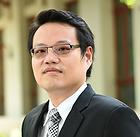
Prof. Dr. Benjapon Chalermsinsuwan
Faculty of Science Chulalongkorn University

Asst. Prof. dr. Junjuda Unruangsri
Faculty of Science Chulalongkorn University

Asst.Prof.Motiar Rahaman
Academic Chair in Power-to-Fuel at University of Liège, Belgium.
Local Organizing Committee

Assoc. Prof. Dr. Soorathep Kheawhom
Faculty of Engineering Chulalongkorn University

Associate Professor Lapyote Prasittisopin
Faculty of Science Chulalongkorn University

Dr. Orapa
Tamwattana
Faculty of Science
Khon Kaen University

Dr. Chanon
Pornrungroj
Faculty of Engineering Chulalongkorn University

Assoc. Prof Dr. Rojana Pornprasertsuk
Faculty of Science Chulalongkorn University

Assist. Prof. Dr. Prasit Pattananuwat
Faculty of Science Chulalongkorn University

Dr. Manunya
Okhawilai
Faculty of Engineering
Chulalongkorn University

Prof. Dr. Anongnat
Somwangthanaroj
Faculty of Engineering Chulalongkorn University
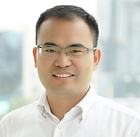
Dr. Jiaqian Qin
Faculty of Science Chulalongkorn University

Dr. Wanwisa
Limphirat
Synchrotron Light Research Institute, SLRI
Keynote
Prof. Jia Guo
Fudan University
Prof. Kisuk Kang
Seoul National University
Prof. Charles S. Henry
Colorado State University
List of invited speakers
Prof. Xianwen Mao
National University of Singapore
Prof. Manfred Martin
RWTH Aachen University
Prof. Peichen Su
Nanyang Technological University
Prof. Sukwon Cha
Seoul National University
Prof. Seokwoo Jeon
Korea University
Prof. Hyunsuk Jung
Sungkyunkwan University
Additional invited speakers and keynotes will be announced soon
Supported by


